Reclaimed wood is lumber that has been pulled from old barns, factories, warehouses, or demolished buildings and given a second life. Every board carries visible history — nail holes, saw marks, weathered grain — that new wood simply can’t replicate. That character is exactly what makes it one of the most sought-after materials in home decor today.
It’s also a responsible choice. Using reclaimed wood keeps old-growth timber out of landfills and reduces demand for freshly cut lumber. You get beauty, depth, and sustainability all in one material.
This guide covers everything you need to know: where to source it, how to finish it, where to use it in your home, and how to style it with other natural materials.
Key Takeaways
- Reclaimed wood adds irreplaceable texture and history that new materials can’t match.
- Common sources include architectural salvage yards, online marketplaces, and barn deconstruction companies.
- Proper drying and kiln treatment are essential before using reclaimed wood indoors.
- Accent walls, open shelving, flooring, and furniture are the four highest-impact applications.
- Reclaimed wood pairs beautifully with stone, linen, iron, and concrete for a layered natural aesthetic.
- Finishing options range from raw wax to penetrating oil to matte polyurethane, depending on use and desired look.
What Makes Reclaimed Wood Different From New Wood?
Quick Answer: Reclaimed wood comes from old structures like barns, factories, and warehouses. It has denser grain, natural patina, and character marks that new lumber lacks. It’s also more dimensionally stable because it has already dried and settled over decades.
New lumber is cut from young, fast-growing trees. Those trees haven’t had time to develop the tight grain density that old-growth forests produced over hundreds of years. Reclaimed wood, by contrast, often comes from trees that were decades or centuries old when first harvested.
That density matters practically, not just aesthetically. Denser grain means better resistance to dents, warping, and moisture fluctuations. A reclaimed oak floor will outlast a comparable new oak floor by a significant margin under normal use.
What Are the Most Common Wood Species Found in Reclaimed Lumber?
The species you’ll find depends heavily on region and source type. Barns in the American Midwest and South tend to yield Douglas fir, heart pine, and chestnut. Coastal New England structures often contain white oak and hemlock. Industrial buildings frequently have hard maple and American elm.
Heart pine is particularly prized. It’s extremely dense, has a warm amber tone, and accepts stain and oil beautifully. Old-growth chestnut is rare and valuable because the American chestnut tree was nearly wiped out by blight in the early 1900s. Finding chestnut boards today means finding wood that’s genuinely irreplaceable.
Where Can You Source Reclaimed Wood for Home Projects?
Quick Answer: You can find reclaimed wood at architectural salvage yards, barn deconstruction companies, local classifieds, and specialty online retailers. Prices range from $5 to $20 per board foot depending on species, thickness, and condition.
Architectural Salvage Yards
Salvage yards are the most hands-on option. You can inspect boards directly, check for consistent thickness, and look for defects before buying. Most salvage yards sort wood by species and grade, so you know what you’re getting.
Bring a moisture meter when you shop. Reclaimed wood should have a moisture content below 19% before use in interior applications. Anything higher risks shrinkage, cupping, or mold after installation.
Barn Deconstruction Companies
These companies specialize in carefully dismantling old farm structures and reselling the materials. They usually kiln-dry and surface-plane the wood before selling it, which saves you significant prep work. Expect to pay a premium for this convenience — but you’ll also get consistent dimensions and documented species identification.
Online Marketplaces and Specialty Retailers
Platforms like Etsy, Craigslist, and Facebook Marketplace frequently list reclaimed wood from local sources. Specialty retailers like Elmwood Reclaimed Timber and TerraMai offer kiln-dried, graded reclaimed wood shipped nationally. Online options trade the hands-on inspection for convenience and wider species selection.
What Should You Check Before Buying Reclaimed Wood?
Look for four things: moisture content, pest evidence, lead paint, and dimensional consistency. Old industrial wood may contain lead-based paint, especially if it was painted before 1978. A basic lead test kit costs under $15 and can save you from a serious health risk.
Check the ends of boards for small round holes, which indicate wood-boring beetles. Active infestations can spread to the rest of your home’s structure. Kiln-dried reclaimed wood will have eliminated active pests, but raw salvage wood requires inspection.
| Source Type | Average Cost (Per Board Foot) | Condition | Species Variety | Requires Prep? |
|---|---|---|---|---|
| Architectural Salvage Yard | $5–$10 | Raw, as-is | Moderate | Yes — drying, planing |
| Barn Deconstruction Company | $8–$15 | Kiln-dried, planed | Moderate | Minimal |
| Specialty Online Retailer | $10–$20 | Kiln-dried, graded | High | None |
| Local Classifieds | $2–$8 | Variable | Low | Yes — full inspection needed |
| Demolition Contractors | $1–$5 (sometimes free) | Raw, mixed quality | Low | Yes — extensive prep |
How Do You Prepare Reclaimed Wood for Indoor Use?
Quick Answer: Reclaimed wood for indoor use needs to be cleaned, dried to under 19% moisture content, inspected for pests, and milled to consistent thickness. Kiln drying kills any active insects and prevents future warping. Budget 2–4 weeks for raw salvage to be fully prep-ready.
Cleaning and De-nailing
Start by removing all metal hardware — nails, staples, bolts, and screws. Even small embedded metal fragments will damage planer blades and jointer knives. Use a metal detector wand along every board before running it through any machinery.
Scrub the surface with a stiff brush and a diluted white vinegar solution to remove dirt, old surface treatments, and mildew. Let boards dry thoroughly before moving to the next step.
Kiln Drying vs. Air Drying
Kiln drying is faster and more reliable for indoor applications. A commercial kiln brings moisture content down to 6–8% in days. Air drying takes 1 inch of thickness per year as a rough guideline, so a 2-inch-thick board needs roughly 2 years of stacked, ventilated drying to be stable.
For small DIY projects, air drying is often sufficient. For flooring, large furniture, or anything that needs dimensional precision, kiln drying is the safer choice.
Milling and Surface Treatment
Once dry, boards get run through a surface planer to create consistent thickness. You can choose to leave the face weathered and textured, lightly plane for a “wire-brushed” look, or fully smooth for a clean modern surface. The level of milling you choose shapes the entire visual result of your project.
What Are the Best Applications for Reclaimed Wood in Home Decor?

Quick Answer: The four highest-impact uses are accent walls, open shelving, flooring, and furniture. Each application suits different wood grades and thicknesses. Accent walls work with thinner boards (3/4 inch), while flooring requires boards at least 3/4 inch thick with tongue-and-groove milling.
Reclaimed Wood Accent Walls
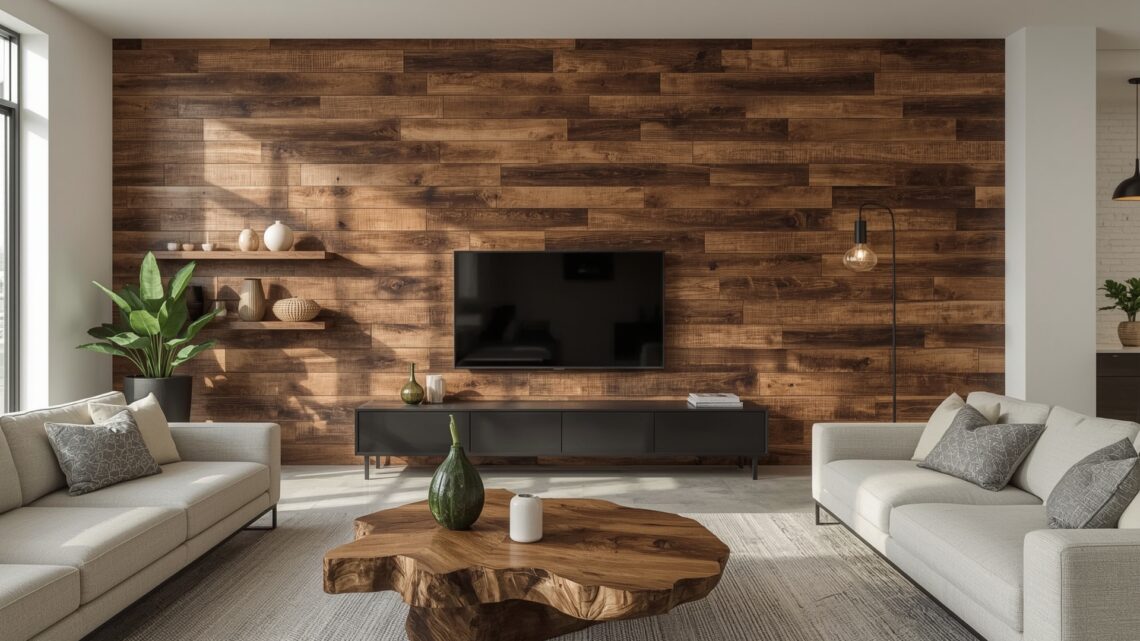
A reclaimed wood accent wall brings texture and warmth to any room. Living rooms, bedrooms, and entryways are the most common locations. The wall behind a bed or sofa tends to be the strongest placement because it anchors the room’s visual focal point.
For a horizontal installation, use boards in varying widths between 3 and 8 inches. Random-width planks look more authentic than perfectly uniform rows. Leave a 1/8-inch gap between boards to allow for natural wood movement with humidity changes.
Open Shelving and Floating Shelves
Reclaimed wood shelving is one of the most accessible entry points. A single thick board — at least 1.5 to 2 inches thick — mounted with heavy-duty floating shelf brackets becomes an instant statement piece in a kitchen, bathroom, or home office.
Reclaimed Douglas fir and oak are excellent for shelving because they’re dense enough to hold real weight without visible sag. A 36-inch span of 2-inch-thick Douglas fir can hold approximately 50–75 pounds before showing deflection.
Reclaimed Wood Flooring
Reclaimed flooring is the highest-investment application, but also the longest-lasting. Old-growth heart pine and oak are the top species choices for floors because their tight grain resists denting and takes refinishing well.
Most reclaimed flooring is sold as solid planks, though engineered reclaimed wood options exist for installation over concrete slabs or radiant heating systems. Solid reclaimed planks should not be glued down over radiant heat without a proper moisture and heat barrier.
Reclaimed Wood Furniture
Tables, benches, headboards, and shelving units made from reclaimed wood have become staples in both residential and commercial interior design. The visual impact of a dining table made from 150-year-old barn oak is something mass-produced furniture simply cannot replicate.
When buying reclaimed wood furniture, look for evidence of quality joinery. Mortise-and-tenon or dovetail joints indicate craftsmanship. Furniture held together primarily by pocket screws and wood glue won’t have the same longevity.
| Application | Recommended Thickness | Best Species | Avg. Material Cost | DIY-Friendly? |
|---|---|---|---|---|
| Accent Wall | 3/4 inch | Pine, fir, cedar | $3–$8/sq ft | Yes |
| Open Shelving | 1.5–2 inches | Oak, Douglas fir | $8–$15/board ft | Yes |
| Flooring | 3/4–1.5 inches | Heart pine, oak | $8–$18/sq ft installed | Moderate — some skill needed |
| Dining Table | 2–3 inches (top slab) | Oak, elm, walnut | $600–$3,000+ (custom) | Advanced woodworking skill needed |
| Headboard | 3/4–1.5 inches | Pine, fir, oak | $150–$600 (DIY or pre-made) | Yes |
How Do You Finish Reclaimed Wood to Protect It?
Quick Answer: The right finish depends on the application. Raw wax and penetrating oil preserve the weathered look for walls and decorative pieces. Matte polyurethane or hard-wax oil works better for floors and furniture that face daily wear and moisture exposure.
Penetrating Oil Finishes
Penetrating oils — like tung oil, linseed oil, and Danish oil — soak into the wood fiber rather than sitting on top. They enhance the natural grain color and keep the surface feeling tactile and authentic. They’re ideal for tabletops, shelving, and furniture where you want a natural look without a plastic-like coating.
The tradeoff is maintenance. Penetrating oil finishes need reapplication every 1–3 years, depending on use. A dining table finished in pure tung oil will need fresh coats more frequently than a decorative shelf.
Hard-Wax Oil
Hard-wax oil is a hybrid finish combining oil penetration with a thin wax surface layer. Brands like Rubio Monocoat and Osmo Polyx-Oil are popular in residential use. These finishes offer better water resistance than pure oil alone and are relatively easy to spot-repair — you can refresh a worn section without refinishing the entire surface.
Polyurethane and Lacquer
Film-forming finishes like polyurethane create a hard protective layer on top of the wood. They provide the highest durability and moisture resistance, making them suitable for flooring and high-traffic surfaces. The downside is that they can obscure some of the wood’s natural texture and, when worn, require full sanding and re-coating rather than simple spot repair.
For reclaimed wood flooring, a matte or satin polyurethane is a practical choice that protects without making the floor look plasticky.
| Finish Type | Water Resistance | Natural Appearance | Maintenance Frequency | Best For |
|---|---|---|---|---|
| Pure Tung Oil | Low | Excellent | Every 1–2 years | Decorative shelving, furniture |
| Danish Oil | Low–Moderate | Very Good | Every 2–3 years | Furniture, wall panels |
| Hard-Wax Oil (e.g., Rubio Monocoat) | Moderate–High | Excellent | Every 3–5 years | Floors, tables, countertops |
| Matte Polyurethane | High | Good | Every 5–10 years | High-traffic flooring |
| Raw Beeswax | Low | Excellent | Every 6–12 months | Accent walls, decorative pieces |
How Do You Style Reclaimed Wood With Other Natural Materials?

Quick Answer: Reclaimed wood pairs best with stone, linen, iron, concrete, and leather. These materials share a raw, honest quality that reinforces each other. The key is varying texture while keeping a consistent tonal warmth — avoid mixing too many competing material finishes in one space.
Reclaimed Wood and Stone
Stone and wood are a natural pairing because both carry visible imperfection as a feature. A reclaimed oak dining table alongside a honed marble or slate floor creates textural contrast while staying in the same warm-neutral palette. In kitchens, reclaimed wood open shelving above a stone tile backsplash is one of the most cohesive combinations you can use.
Keep stone finishes matte or honed rather than polished when pairing with reclaimed wood. Polished stone reflects light in a way that competes with the organic texture of the wood rather than complementing it.
Reclaimed Wood and Iron or Steel
Industrial aesthetics built on the reclaimed-wood-plus-iron formula. Raw or blackened steel shelf brackets, iron pipe shelving systems, and steel-framed furniture legs all work naturally with weathered lumber. The contrast between the cold hardness of metal and the warm texture of old wood is visually compelling without being busy.
Hairpin legs in matte black steel on a reclaimed wood coffee table or bench are one of the simplest, most affordable ways to bring this combination into your home.
Reclaimed Wood and Linen or Wool
Soft textiles soften the roughness of reclaimed wood surfaces. Linen curtains, wool throws, and jute rugs all pull warmth from wood’s natural tones without overwhelming the material. In a bedroom with a reclaimed wood headboard, layering a linen duvet with a chunky wool throw creates a coherent texture story across every surface in the room.
Reclaimed Wood and Concrete
Concrete and reclaimed wood share a visual language rooted in honest, unfinished materials. This pairing works particularly well in modern or loft-style spaces. A reclaimed wood floating shelf against a raw concrete wall needs nothing else to read as intentional design. Keep accessories minimal in this combination — the materials themselves carry the visual weight.
Is Reclaimed Wood an Eco-Friendly Choice?
Quick Answer: Yes. Reclaimed wood diverts lumber from landfills and eliminates the need to harvest new timber. Using one board foot of reclaimed wood avoids the carbon cost of logging, milling, and transporting new lumber. It’s one of the most genuinely low-impact material choices in home decor.
The environmental case for reclaimed wood is straightforward. Old structures slated for demolition contain enormous volumes of perfectly usable timber. Without salvage efforts, that wood gets sent to landfills or burned. Using it instead of new lumber reduces deforestation pressure and the energy cost of processing virgin timber.
One important caveat: transportation matters. Shipping reclaimed wood cross-country erodes some of its carbon benefit. Sourcing locally from salvage yards within your region is the most environmentally sound approach.
What About Formaldehyde and VOCs in Reclaimed Wood?
Raw reclaimed wood contains no added formaldehyde. It wasn’t processed with the adhesives and binders used in engineered wood products like MDF or plywood. However, old paint and surface treatments on reclaimed wood can contain lead or other harmful compounds — which is why pre-purchase testing matters.
Choose low-VOC (volatile organic compound) finishes when treating reclaimed wood for indoor use. Water-based polyurethanes and hard-wax oils like Rubio Monocoat have significantly lower VOC levels than traditional solvent-based lacquers.
How Much Does Reclaimed Wood Home Decor Cost?
Quick Answer: Costs vary widely by application. Raw salvage wood starts at $2–$5 per board foot. Finished reclaimed flooring runs $8–$18 per square foot installed. Custom reclaimed furniture ranges from $600 for a simple bench to over $5,000 for a large dining table from a specialty maker.
Cost Factors That Drive Price Variation
Species rarity is the biggest driver. Common reclaimed pine or fir costs a fraction of what old-growth American chestnut or black walnut commands. Surface preparation also adds cost — kiln-dried, milled, and graded reclaimed wood will always cost more than raw salvage.
Custom work adds significant markup. A furniture maker charging for design, joinery, finishing, and delivery on a custom reclaimed oak table isn’t overcharging — the labor involved far exceeds that of mass-produced furniture.
| Project Type | Material Cost | Labor/Install Cost | Total Estimated Range |
|---|---|---|---|
| Accent Wall (100 sq ft) | $300–$800 | $200–$500 (DIY: $0) | $300–$1,300 |
| Open Shelving (3 shelves) | $80–$200 | $100–$300 | $180–$500 |
| Flooring (200 sq ft) | $800–$2,000 | $600–$1,400 | $1,400–$3,400 |
| Dining Table (custom) | $400–$1,200 (wood only) | $400–$2,500 (craftsmanship) | $800–$5,000+ |
| Headboard (DIY) | $60–$150 | $0 (DIY) | $60–$150 |
What Design Styles Work Best With Reclaimed Wood?

Quick Answer: Reclaimed wood fits most naturally in rustic, farmhouse, industrial, and organic modern styles. It also integrates well into Japandi and biophilic design aesthetics, where raw natural materials are central to the visual language. It’s harder to make work in ultra-minimalist or highly polished contemporary spaces.
Rustic and Farmhouse Interiors
These styles are the most natural home for reclaimed wood. Rough-sawn textures, visible knots, and aged color variation align directly with the warm, lived-in quality that defines farmhouse and rustic design. Pair reclaimed wood with white shiplap, galvanized metal, and stone to hit the classic notes of this style.
Industrial and Loft Spaces
Reclaimed wood softens the hardness of industrial spaces. Against exposed brick, concrete, and steel, a reclaimed wood floor or ceiling treatment introduces warmth that prevents a space from feeling cold or sterile. Industrial design without any organic material often feels harsh. Reclaimed wood is one of the most efficient fixes for that problem.
Organic Modern and Biophilic Interiors
Organic modern design emphasizes natural materials, imperfect textures, and earthy color palettes. Reclaimed wood fits naturally into this aesthetic, especially when combined with living plants, natural stone, and textured ceramics. In biophilic design specifically, reclaimed wood contributes to the connection-to-nature principles that define the style by bringing literal history and natural material depth into the space.
Frequently Asked Questions
Can reclaimed wood be used in bathrooms?
Yes, with the right finish and placement. Avoid using reclaimed wood directly next to a shower or bathtub unless it’s heavily sealed with a waterproof finish. For vanity countertops, floating shelves, and decorative walls in bathrooms, reclaimed wood works well when finished with a moisture-resistant hard-wax oil or polyurethane. Good ventilation is essential to prevent long-term moisture damage.
How do you tell real reclaimed wood from faux reclaimed wood?
Real reclaimed wood has consistent character throughout the full thickness of the board — nail holes that go deep, weathering that penetrates the surface, and grain density that matches old-growth timber. Faux reclaimed wood (often engineered or artificially distressed new lumber) shows distressing only on the surface face. Check the end grain and the back side of the board to confirm authenticity.
Does reclaimed wood need to be kiln-dried before use?
It depends on the application. For walls, decorative headboards, and low-stakes applications, air-dried wood with moisture content below 19% is acceptable. For flooring, furniture, and anything requiring dimensional precision, kiln drying to 6–8% moisture content is strongly recommended to prevent warping and joint failure after installation.
What is the most durable reclaimed wood species for flooring?
Heart pine and white oak are the most durable commonly available reclaimed species for flooring. Heart pine, cut from old longleaf pine trees, has a Janka hardness rating of 1,225 lbf. White oak rates around 1,360 lbf. Both species take refinishing well and maintain their appearance under decades of regular foot traffic.
Is reclaimed wood more expensive than new hardwood?
Reclaimed wood typically costs 20–50% more than comparable new hardwood by board foot. The premium reflects processing costs, rarity, and the irreplaceable character of old-growth timber. However, for applications like accent walls where thin boards are used at low material volume, the price difference is often modest in absolute terms — a 100-square-foot accent wall might cost only $200–$400 more in reclaimed wood versus new lumber.
How do you lighten or bleach reclaimed wood without losing its character?
Two-part wood bleach (sodium hydroxide followed by hydrogen peroxide) removes tannin-based discoloration and lightens the overall tone while preserving grain texture. Oxalic acid bleach targets iron stains specifically — common in reclaimed wood that had nail contact over decades. After bleaching, allow the wood to fully neutralize and dry before applying any finish. The grain and character marks remain visible after bleaching.