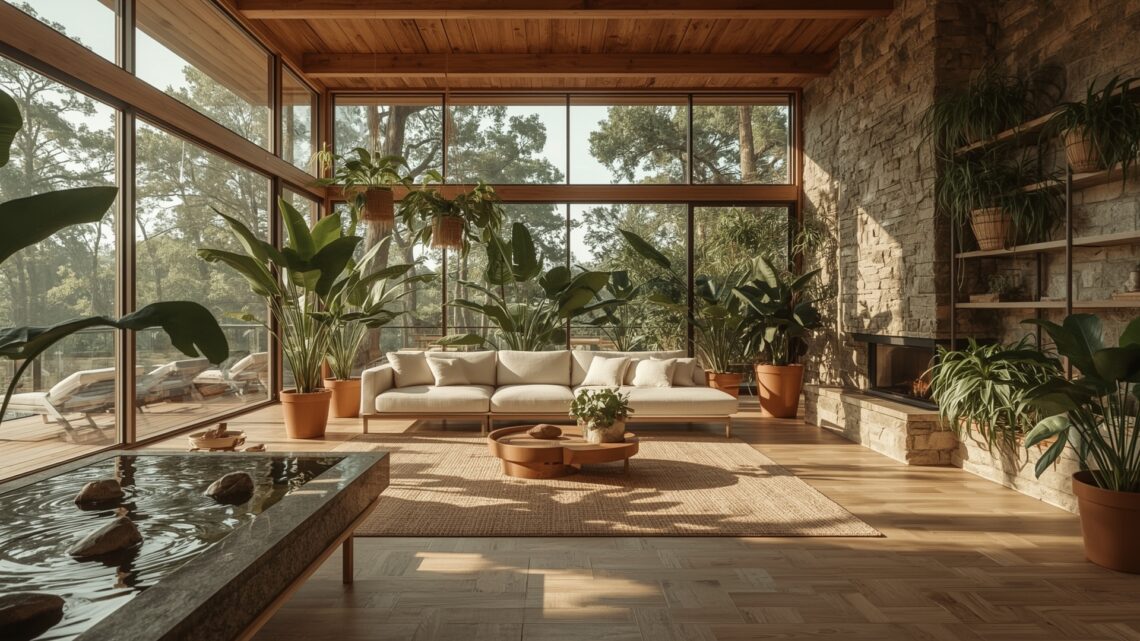
Biophilic design is the practice of connecting your home to the natural world. It uses plants, natural light, water, organic textures, and earthy materials to create spaces that feel alive and restorative. Research consistently shows that people feel less stressed, more focused, and more comfortable in rooms with natural elements. Your home can achieve that same effect.
This guide covers the core principles, plant strategies, lighting techniques, water features, and material choices that make biophilic design work in real residential spaces.
Key Takeaways
- Biophilic design reduces stress by reconnecting occupants with nature through sensory elements like plants, light, and water.
- Natural light is the foundation of any biophilic interior — it influences mood, circadian rhythm, and perceived space.
- Plants improve air quality and well-being, but plant selection should match your light conditions and maintenance capacity.
- Water features add auditory and visual nature cues that trigger relaxation responses in the brain.
- Organic materials like wood, stone, linen, and clay reinforce the nature connection without requiring live elements.
- Layering multiple biophilic elements produces stronger benefits than adding a single plant or feature in isolation.
What Is Biophilic Interior Design and Why Does It Matter?
Quick Answer: Biophilic interior design brings natural elements — plants, light, water, wood, and stone — into living spaces to support human well-being. Studies show it can lower cortisol levels, improve focus by up to 15%, and reduce feelings of anxiety in residential settings.
The word “biophilic” comes from the Greek for “love of life.” The concept was popularized by biologist E.O. Wilson, who argued that humans have an innate need to connect with nature. When that connection is absent — as it often is in modern apartments and suburban homes — people feel its absence without always knowing why.
Biophilic design addresses this by intentionally weaving natural cues into the built environment. It is not just about adding a few houseplants. It is a design philosophy that considers how every surface, material, light source, and spatial arrangement can reinforce a sense of being in and among nature.
How Is Biophilic Design Different from “Natural Decor”?
Natural decor is a style choice. Biophilic design is a functional strategy. A wooden coffee table is natural decor. A room designed around maximizing daylight, housing living plants at multiple heights, and incorporating the sound of moving water is biophilic design. The distinction matters because biophilic spaces are designed to produce measurable psychological and physiological outcomes, not just aesthetic ones.
What Are the Core Principles of Biophilic Design?
Quick Answer: Biophilic design is built on three core principles: direct nature connections (plants, light, water), indirect nature connections (natural materials, organic patterns), and spatial experiences that mimic nature (prospect, refuge, mystery). These principles guide every design decision.
Stephen Kellert, a leading figure in biophilic design theory, identified three organizing frameworks. Understanding them helps you make intentional choices rather than random ones.
Direct Experience of Nature
This includes anything alive, moving, or dynamic. Plants, natural light, water features, breezes through open windows, and even pets qualify. Direct elements are the most powerful because they engage multiple senses simultaneously.
Indirect Experience of Nature
This covers materials and patterns that evoke nature without being alive. Think stone tiles, reclaimed wood shelving, linen upholstery, and botanical prints. These elements reinforce the nature connection at a subconscious level, especially in rooms where live plants are not practical.
Spatial Conditions That Mimic Nature
Humans evolved in landscapes with specific spatial qualities. We feel safe in spaces with a sheltered back and an open view ahead. This is called the “prospect and refuge” principle. A reading nook tucked against a wall, facing a large window, hits both notes perfectly. “Mystery” — the sense that something interesting lies just beyond your current view — is another spatial cue that keeps people engaged in a space.
Which Plants Work Best for Biophilic Interior Design?

Quick Answer: The best plants for biophilic interiors are ones that thrive in your actual light conditions. Pothos, snake plants, and ZZ plants work in low-light rooms. Fiddle-leaf figs, monsteras, and bird of paradise need bright indirect light. Match the plant to the room first.
The single biggest mistake people make with indoor plants is choosing based on looks rather than light. A gorgeous fiddle-leaf fig will drop every leaf in a north-facing bedroom within six months. A snake plant will outlive your sofa in the same room.
Low-Light Plant Options
- Snake plant (Sansevieria): Tolerates neglect, filters airborne toxins, grows vertically to fill corners.
- ZZ plant (Zamioculcas zamiifolia): Handles inconsistent watering, glossy leaves reflect light.
- Pothos (Epipremnum aureum): Fast-growing, ideal for shelves and hanging planters, extremely forgiving.
- Cast iron plant (Aspidistra elatior): Lives up to its name — nearly indestructible in dim rooms.
Bright Indirect Light Plant Options
- Monstera deliciosa: Large split leaves create dramatic visual texture, grows quickly in east or west-facing windows.
- Fiddle-leaf fig (Ficus lyrata): Bold architectural presence, needs bright filtered light and consistent conditions.
- Bird of paradise (Strelitzia reginae): Statement floor plant, needs 4-6 hours of bright indirect light daily.
- Peace lily (Spathiphyllum): Tolerates lower light than most flowering plants, signals when it needs water by drooping slightly.
Plant Placement Strategy
Biophilic design uses plants at multiple vertical levels. Ground-level planters anchor a space. Mid-level plants on shelves and tables create layers. Hanging plants and trailing vines add a canopy effect. This vertical layering mimics how plants grow in natural environments and creates a much stronger nature immersion than clustering plants on a single windowsill.
| Plant | Light Requirement | Mature Height | Watering Frequency | Best Room Placement |
|---|---|---|---|---|
| Snake Plant | Low to bright indirect | 2–4 ft | Every 2–6 weeks | Bedroom, hallway |
| Monstera Deliciosa | Bright indirect | 3–8 ft indoors | Every 1–2 weeks | Living room, dining room |
| Pothos | Low to moderate indirect | Trailing 6–10 ft | Every 1–2 weeks | Shelves, kitchen, office |
| Bird of Paradise | Bright indirect to some direct | 4–6 ft indoors | Every 1–2 weeks | Sunny living room corner |
| Peace Lily | Low to moderate indirect | 1–3 ft | Every 1 week | Bathroom, bedroom |
| ZZ Plant | Low to moderate indirect | 2–3 ft | Every 3–4 weeks | Any room with minimal light |
How Do You Maximize Natural Light in a Biophilic Interior?

Quick Answer: Maximize natural light by using sheer curtains instead of blackout blinds, positioning mirrors opposite windows, choosing light-reflective wall colors, and keeping windowsills clear. These changes can increase perceived brightness by 30–50% without structural work.
Natural light is the most powerful biophilic tool available to you. It does more than illuminate a room. It regulates your circadian rhythm (your body’s internal clock), affects your mood, and signals to your brain that you are connected to an outdoor environment.
Window Treatments That Maximize Daylight
Blackout curtains are the enemy of biophilic design. Replace them with sheer linen or cotton panels that filter light without blocking it. If privacy is the concern, use bottom-up blinds that reveal the sky while shielding the lower portion of the window. Plantation shutters with adjustable louvers give you full control over light angle and intensity throughout the day.
Mirrors as a Light Strategy
A large mirror placed on the wall directly opposite a window doubles the amount of natural light in a room. It is not a trick — it is physics. The mirror reflects the full spectrum of daylight back into the space. Position the mirror at the same height as the window for maximum effect. Oversized floor mirrors work particularly well in narrow rooms and hallways.
Paint Colors That Support Natural Light
Light, warm neutrals with yellow or cream undertones amplify daylight. Cool grays absorb light rather than reflect it. Earthy tones — warm whites, soft terracotta, sage green — also align with biophilic principles by evoking the natural color palette of soil, sky, and foliage.
| Strategy | Estimated Light Gain | Cost Range | Complexity | Best Application |
|---|---|---|---|---|
| Sheer curtains (replacing blackout) | 30–50% increase in perceived brightness | $40–$200 per window | Low | All rooms |
| Opposite-wall mirror | Up to 2x light reflection | $80–$600 | Low | Dark rooms, hallways |
| Light-reflective wall paint | 10–20% brightness increase | $50–$200 per room | Medium | North-facing rooms |
| Skylights | Up to 3x natural light vs. wall window | $1,500–$4,500 installed | High | Kitchens, bathrooms, top floors |
| Glass partition walls | Redistributes existing daylight | $800–$3,000 | High | Open-plan renovations |
What Role Do Water Features Play in a Biophilic Home?
Quick Answer: Indoor water features add the sound of moving water, which research links to lower heart rate and reduced stress hormones. Small tabletop fountains start at around $30. Wall-mounted water walls for living rooms range from $200 to $2,000 depending on size and material.
Water is the most underused biophilic element in residential design. Most homeowners consider it a commercial or spa feature. But even a small tabletop fountain on a console table changes the acoustic character of a room in a way that plants and materials simply cannot.
Tabletop and Floor Fountains
These are the most accessible entry point. A ceramic or stone tabletop fountain runs on a small recirculating pump and requires only a power outlet and occasional top-up of water. They are best placed in living rooms, home offices, or bedrooms where you spend extended time. The sound is most effective at low to medium volume — you want to be aware of it without it becoming background noise.
Wall-Mounted Water Features
A water wall is a vertical panel — usually made of stone, slate, copper, or glass — over which a thin sheet of water flows continuously. These work well as room dividers or as focal walls in living rooms and entryways. They require a power outlet and a small reservoir that needs occasional cleaning to prevent algae. Professional installation ensures proper waterproofing, especially near walls.
Bathroom Water Design
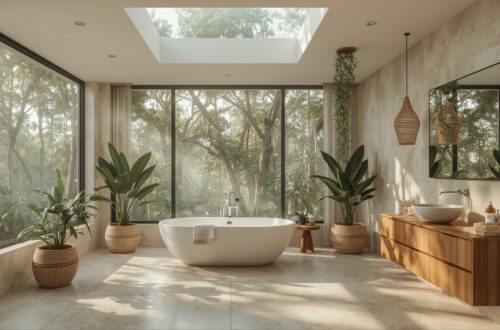
The bathroom is the easiest room to amplify biophilic water cues. Rain shower heads deliver water in a dispersed, natural pattern rather than a focused stream. Freestanding soaking tubs positioned near a window with garden or sky views combine the visual and tactile qualities of water with natural light. Adding humidity-tolerant plants like peace lilies or Boston ferns completes the sensory environment.
| Feature Type | Price Range | Sound Level | Maintenance | Best Room |
|---|---|---|---|---|
| Tabletop fountain (ceramic) | $30–$150 | Low (subtle trickle) | Top up water weekly, clean monthly | Office, bedroom, living room |
| Floor fountain (large stone) | $200–$800 | Low–Medium | Clean pump quarterly | Living room, entryway |
| Wall-mounted water wall | $200–$2,000 | Medium | Clean reservoir monthly, check pump quarterly | Living room, entryway, dining room |
| Rain shower head | $50–$400 installed | Medium–High (in use) | Descale every 3–6 months | Bathroom |
| Aquarium (25–50 gallon) | $300–$1,200 setup | Low (filter hum) | Weekly water changes, monthly full clean | Living room, dining room |
What Natural Materials Should You Use in a Biophilic Interior?

Quick Answer: The best natural materials for biophilic interiors are wood, stone, clay, linen, jute, and cork. Each one engages a different sense — texture, temperature, smell — and reinforces the nature connection even in rooms where live plants are not practical.
Materials are the skeleton of biophilic design. They work even when every plant is dormant and the curtains are closed. Choosing materials that evoke natural environments fills your home with sensory cues that reinforce calm and connection throughout every season.
Wood
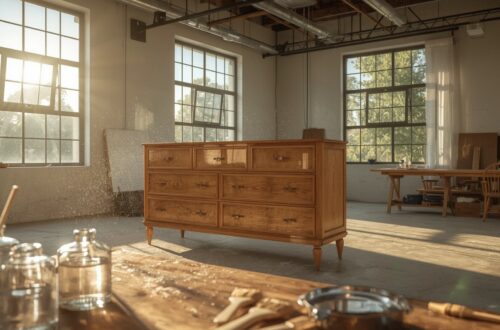
Wood is the most versatile biophilic material. Exposed ceiling beams, reclaimed wood shelving, hardwood floors, and live-edge furniture all introduce the warmth, grain, and organic irregularity that makes a space feel grounded. Lighter woods like oak, ash, and maple keep spaces bright. Darker woods like walnut and teak create warmth and depth. The key is visible grain — veneer over MDF misses the point because it eliminates the tactile quality.
Stone and Clay
Stone is cool to the touch and carries a visual weight that anchors a room. Slate, limestone, travertine, and river pebbles all bring different textures and tones. Clay surfaces — including terracotta tiles, handmade ceramic vessels, and earthen plaster walls — add warmth and a handcrafted quality that manufactured materials cannot replicate.
Textile and Fiber
Linen, cotton, jute, sisal, wool, and rattan are the biophilic textile palette. They bring tactile softness and visual texture that synthetic materials lack. A jute area rug, linen sofa throws, and woven rattan pendant lights can transform a room’s sensory character without any structural changes.
| Material | Sensory Quality | Best Application | Cost Range | Maintenance Level |
|---|---|---|---|---|
| Solid oak wood | Warm, tactile grain | Floors, shelving, furniture | $5–$15 per sq ft (flooring) | Low (annual oil/wax) |
| Travertine stone | Cool, textured, earthy | Floors, feature walls, counters | $5–$30 per sq ft | Medium (seal annually) |
| Terracotta tile | Warm, matte, rustic | Kitchen/bathroom floors | $2–$8 per sq ft | Low–Medium (seal initially) |
| Linen upholstery | Soft, breathable, natural drape | Sofas, cushions, curtains | $15–$60 per yard | Low (dry clean or spot clean) |
| Jute/sisal rug | Coarse, grounding, earthy | Living room, hallway floors | $80–$400 | Low (vacuum weekly) |
| Rattan/cane | Light, airy, handcrafted | Chairs, pendants, storage | $50–$800 per piece | Low (dust regularly) |
How Do You Layer Biophilic Elements Without Overwhelming a Space?
Quick Answer: Layer biophilic elements by starting with one anchor feature — a large plant, a natural material floor, or a window treatment change — then adding secondary elements one at a time. Aim for three to five nature cues per room, mixing live elements with materials and light strategies.
The goal is immersion, not clutter. A room crammed with 40 plants, exposed logs, and a waterfall is overwhelming, not restorative. The most effective biophilic interiors feel intentional — every element earns its place and works with the others.
The Three-Layer Approach
Think of biophilic layering like building a forest. The first layer is the structural foundation: natural material floors, walls, and large furniture pieces. The second layer is living elements: plants at varying heights, a water feature if the room supports it. The third layer is detail: organic textiles, botanical artwork, natural-fiber lighting, and unobstructed views to outdoor green spaces.
Room-by-Room Application
Living rooms benefit from a large anchor plant (a monstera or bird of paradise), a natural fiber rug, linen textiles, and a clear sightline to windows or outdoor spaces. Bedrooms prioritize quality of natural morning light, a small number of clean-air plants (snake plant, peace lily), and natural fiber bedding and window treatments. Home offices gain the most from biophilic design because the cognitive benefits — improved focus, reduced mental fatigue — are directly measurable in productivity.
What Biophilic Design Mistakes Should You Avoid?
Quick Answer: The most common biophilic design mistakes are choosing plants for looks instead of light conditions, using faux plants instead of live ones, blocking natural light with heavy window treatments, and adding natural elements without a coherent visual strategy, which creates clutter rather than calm.
Fake plants are the most controversial topic in biophilic design. High-quality artificial plants look convincing, but they provide zero air-quality benefit, no humidity contribution, and no sense of living growth. More importantly, your brain registers the difference even when your eyes do not. Research from the University of Exeter found that living plants produced measurable well-being improvements while artificial plants did not. If you cannot maintain live plants, prioritize natural materials, light, and water features instead.
Overbuying vs. Strategic Placement
More plants do not automatically mean more biophilic impact. A single large, healthy plant in a well-chosen position makes a stronger statement than a dozen small struggling ones. A healthy monstera in a bright corner creates a focal point. A dozen dehydrated succulents scattered across a dark shelf look like neglect. Quality and placement outperform quantity every time.
How Much Does It Cost to Design a Biophilic Interior?
Quick Answer: Biophilic interior design can cost as little as $200 for a single room refresh with plants, sheer curtains, and natural textiles, or as much as $15,000+ for a full home renovation incorporating skylights, built-in planters, water walls, and natural stone surfaces. Most homeowners spend $500–$2,500 per room.
Biophilic design is one of the few interior design approaches where the most impactful elements — natural light and living plants — are also the most affordable. Structural changes like skylights, water walls, and stone cladding raise costs significantly, but they are optional enhancements, not requirements.
Budget Tiers for Biophilic Room Design
- Budget ($150–$500 per room): Swap window treatments for sheers, add 2–3 plants sized for the room’s light, introduce a natural fiber rug or throw, replace one synthetic item with a natural material equivalent.
- Mid-range ($500–$2,500 per room): Add a statement floor plant, a small water feature, reclaimed wood shelving, linen upholstery, and a curated plant arrangement at multiple levels.
- High-end ($2,500–$15,000+ per room): Custom built-in planters, living plant walls, skylights, stone or travertine flooring, wall-mounted water features, and bespoke natural material furniture.
Frequently Asked Questions
Is biophilic design the same as having lots of houseplants?
No. Plants are one component of biophilic design, but the approach also includes natural light strategies, water features, organic materials, and spatial arrangements that mimic natural environments. A room with zero plants but abundant daylight, natural wood surfaces, and stone floors is more biophilic than a room crammed with plants under artificial lighting.
Can biophilic design work in a small apartment?
Yes. Small spaces actually benefit more from biophilic strategies because the right elements make them feel larger and less enclosed. Use mirrors to multiply natural light, choose one or two statement plants rather than many small ones, and opt for natural fiber rugs and linen curtains to add texture without visual weight.
What is a living plant wall and how do I maintain one?
A living plant wall, also called a vertical garden or green wall, is a vertical panel system that holds soil pouches or hydroponic modules for growing plants directly on a wall surface. Maintenance involves watering every 1–2 weeks (or via an automated drip system), monthly fertilizing, and replacing individual plants as needed. Installation costs range from $150 for a small DIY kit to $5,000+ for a professional built-in system.
Do indoor plants actually improve air quality?
Yes, but the effect is often overstated. NASA’s 1989 clean air study found that certain plants remove airborne toxins like formaldehyde, benzene, and trichloroethylene. However, you would need many plants per square foot to achieve significant air purification in a typical room. The primary benefits of indoor plants are psychological — reduced stress, improved mood, and a sense of connection to nature.
What is the best biophilic design change to make first?
Start with natural light. Remove heavy curtains or replace them with sheer panels. Clear your windowsills. Position a mirror opposite your main window. This single change costs under $200 and creates the foundation that makes every other biophilic element — plants, materials, water — look and feel better.
Can biophilic design principles apply to a home office?
Absolutely. Home offices see some of the strongest documented benefits from biophilic design. A study by the Human Spaces report found that employees in environments with natural elements reported 15% higher well-being and 6% higher productivity. Place your desk near a window for natural light, add a mid-sized plant within your sightline, and use a natural wood desk surface to reinforce the connection throughout your workday.